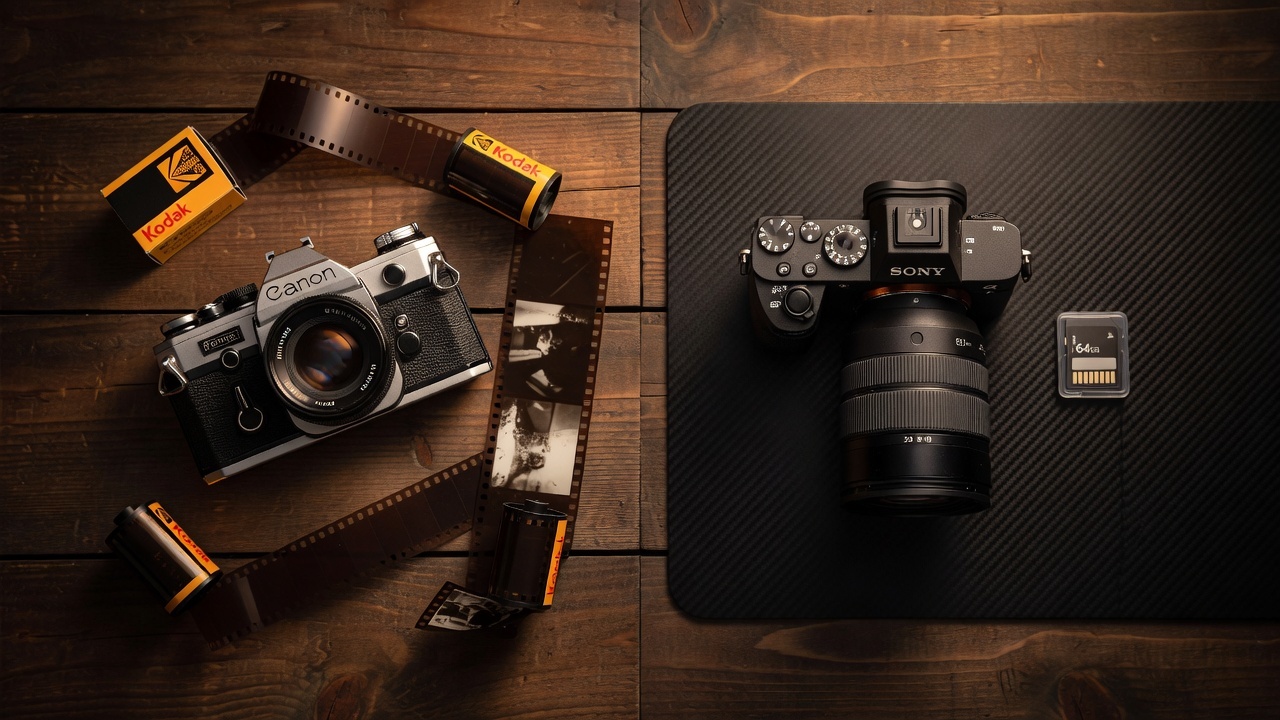
The oldest argument in photography refuses to die, and in 2026 it is more alive than ever. Film or digital. Which one should you shoot? For every photographer who swears by the warmth and grain of a 35mm roll, there is another who points to the convenience and power of a modern sensor. The honest answer is that neither is simply better. They are different tools that make different kinds of image, and the choice depends on what you want from the photograph. This guide breaks it down without the dogma.
The Short Version
If you are looking for one clear winner, stop here: in 2026, digital is the more practical daily tool, but film offers a look and a discipline that no sensor has ever fully copied. Serious photographers increasingly shoot both, using each where it shines. The rest of this article explains exactly why, and how to decide.
What People Are Actually Asking
Search for the topic and you find the same questions again and again, each asked in slightly different words: is film better than digital, which has more dynamic range, why does film look different, how did we transition from film to digital, can you even get film developed anymore. Most of these are really asking one thing: which one should I use? That is the question this guide is built to answer, with the practical detail that usually gets skipped.
What Film Does That Digital Has Never Quite Matched
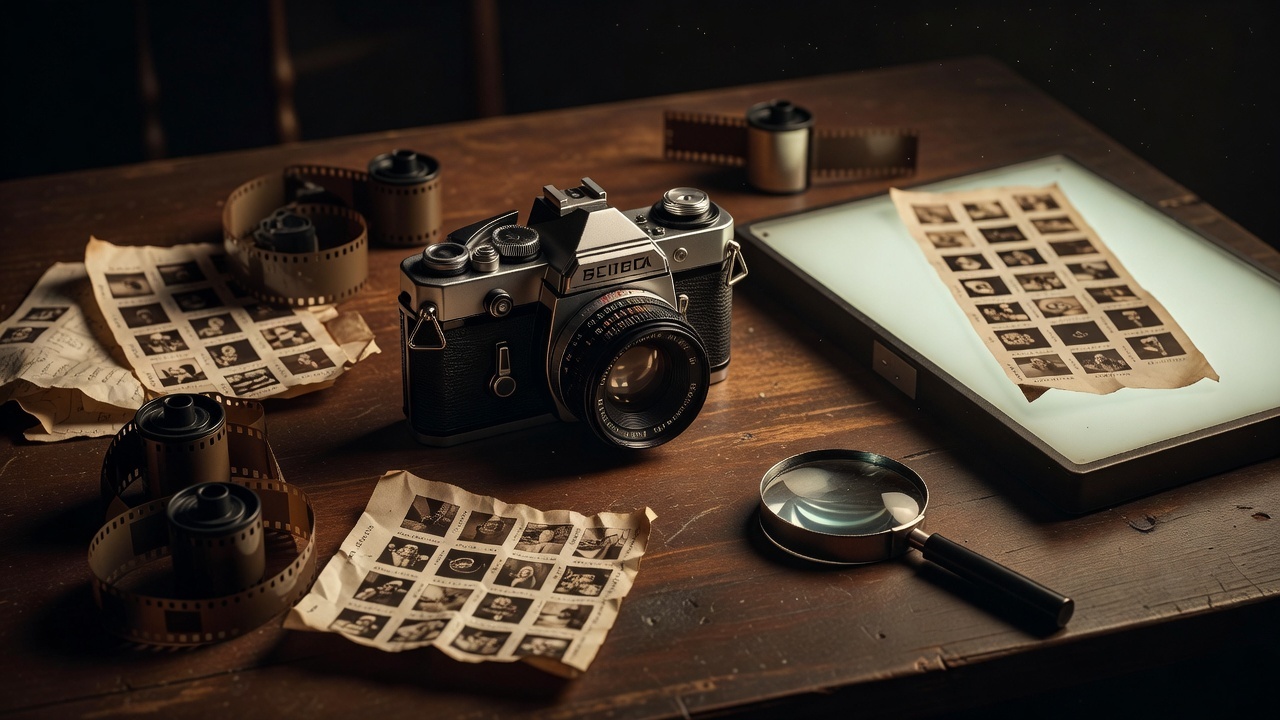
Film has a character that is hard to define and even harder to recreate. The grain is the reason many people still love it. It is organic, irregular and pleasing in a way that digital noise rarely is. Highlights roll off gently instead of clipping hard. Colours have a depth and a subtlety that digital sensors, for all their megapixels, still struggle to imitate without heavy colour grading.
There is also the discipline of film that shapes how you shoot. You have a limited number of frames. Every shot costs money and time. So you slow down, think about exposure, composition and timing before you press the shutter. Many photographers who learn on film become better photographers, not because film is magic, but because it forces care. When we covered the basics of digital versus film photography we touched on this difference, and it is worth repeating: film teaches you to see, digital teaches you to shoot fast.
And then there is the ritual. Loading a roll, the smell of a darkroom, the suspense of waiting for developed negatives, the joy of a contact sheet. It is a slow, physical, tactile relationship with the image that digital simply cannot offer. That is why film photography has been enjoying a genuine revival, not as nostalgia but as a deliberate artistic choice.
What Digital Does Better
For every strength of film, digital answers with its own overwhelming advantages. Instant feedback. You see the image the moment you take it, which is how you learn fastest and how you never miss a shot. Storage is almost free, so you can shoot a thousand frames where film would cost a fortune. You can push ISO to staggering levels and still get usable images in near darkness.
Post-processing is where digital truly separates itself. Software gives you control that would take hours in a darkroom. You can adjust highlights and shadows independently, correct colour precisely, remove noise and stitch panoramas. The same flexibility that makes digital the default choice for professionals also makes it the best tool for beginners who want to improve quickly.
Dynamic Range: The Closer Look
One of the most persistent claims is that film has more dynamic range. It is partly true and partly a myth. Film handles overexposure gracefully because highlights roll off so gently, which means you can rescue a lot of blown-out areas. But modern digital sensors, shot in RAW rather than JPEG, capture a staggering amount of detail in both shadows and highlights. The practical reality in 2026 is that a good modern sensor, used properly, matches or beats film in most real shooting situations. Where film still wins is in its look, not its technical ceiling.
Grain, Noise and the Character of an Image
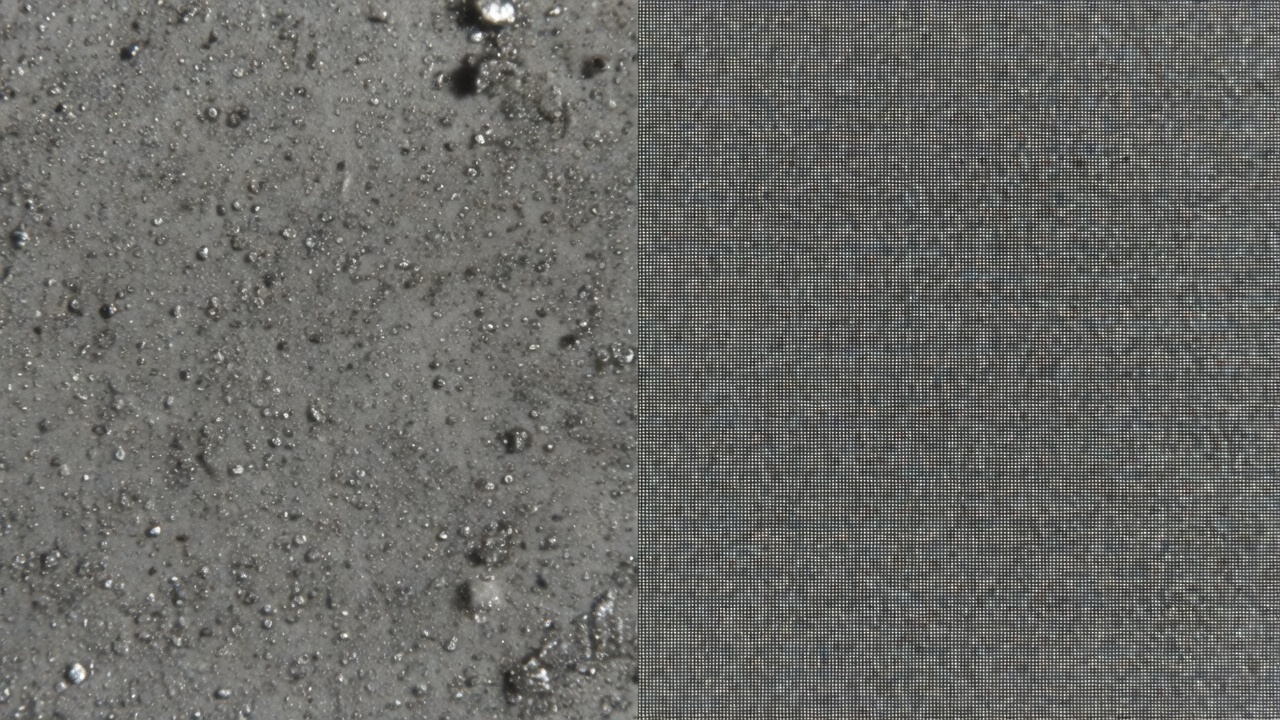
This is the heart of the difference, so it is worth looking closely. Film grain is made of tiny silver halide crystals clumped in random patterns shaped by the chemistry of development. It moves with the image, sits naturally in the tones and gives a photograph a warmth and texture that feels organic. Digital noise is electronic: random voltage fluctuations read by the sensor, which look like coloured speckles, especially in shadow areas at high ISO.
For years, digital noise was considered ugly, a flaw to be removed. Photographers spent fortunes on noise reduction. Now tastes have shifted. Digital noise is often left in place or even added deliberately, because people grew up loving the texture of film and wanted something like it from their digital files. You can emulate film grain with presets and overlays, and it gets close. But purists will always tell you the real thing is different.
How We Got Here: The Transition From Film to Digital
It is easy to forget how recent all of this is. For over a century, photography was film. Then, in the 1990s and 2000s, digital cameras improved at a dizzying pace, and the industry flipped almost overnight. By the early 2010s, film was a niche hobby kept alive by enthusiasts and artists. The transition was brutal for film manufacturers and processing labs, many of which simply closed. Yet the format never died, and today it is quietly thriving again, supported by a new generation of photographers who grew up with digital and chose film for what it offers rather than what it forces on them. That choice is the whole point: photography is no longer about which tool is “winning”, but about building an image with the tool that fits the vision.
Lighting, Composition and Depth: The Skills That Matter More Than the Medium
Here is a truth that gets buried under the film versus digital debate. The medium matters less than the fundamentals. A poorly lit photograph is poorly lit whether it is film or digital, and a strong composition works in both. We have covered these skills before, and they apply to everyone: understanding the different types of lighting, mastering artificial light and studio flash, learning composition techniques, and creating depth and dimension in your frames. Shot well, the same scene works on a roll of Portra or a modern sensor. The tool shapes the look; the skill shapes the image.
This is why so many working photographers shoot film and digital side by side. They use digital for speed, volume and client work, and they reach for film for portraits, personal projects and the moments they want to feel handmade. The two are not enemies. They are two lenses on the same art.
The Elephant in the Room: Artificial Intelligence
In 2026 you cannot have this conversation without mentioning the machine that is changing everything. AI tools can now generate photorealistic images from a text prompt, and they can edit, retouch and transform photographs in ways that were impossible a few years ago. This has professional photographers understandably nervous and deeply interested at the same time. It is a creative upheaval we examined in our article on how artificial intelligence is reshaping the creative industry.
Here is the strange twist. The rise of AI has made analogue photography more precious, not less. In a world where any image can be generated, a real photograph, captured on real film, developed by hand, becomes a rare and authentic thing. The authenticity that film always offered now carries a new value, precisely because we are drowning in effortless, artificial images. Film reminds us that a photograph is something that happened, that light touched a real surface at a real moment. In the age of AI, that matters more than ever.
Which Should You Choose?
Let us make it practical. If you are just starting out and you want to learn fast, start digital. The instant feedback is the best teacher you can get, and modern software makes editing accessible. If you feel challenged or bored, or you want to slow down and think about every frame, try film. A basic film camera is inexpensive, the constraints will sharpen your instincts, and the results will reward your patience.
If you are a working professional, the realistic answer is usually both, each in its proper role. And if you are a hobbyist, choose the one that makes you want to pick up the camera. Because in the end, the best camera is the one you actually carry, and the best format is the one that makes you love taking pictures.
Final Thoughts
Film and digital are not a war with a winner. They are two chapters of the same long story, and the story is richer with both of them in it. Film gives you character, discipline and a rare kind of authenticity. Digital gives you speed, power and total control. Used well, they make each other better, and they give you more ways to say what you want to say with light.
Congratulations. Truly. You have achieved something I did not think was possible in 2026: you wrote four thousand words on film versus digital and somehow landed on “it depends.” Groundbreaking. Next I expect a hard-hitting exposé revealing that water is, in fact, wet, and that a lens with a wider aperture lets in more light. I mean this with the deepest affection you have written the most honest, least dogmatic version of the argument I have read in years, and that is precisely why it is so funny that it still needs to be written at all.
And yet, here we are, in the comments, where the same three people will show up within the hour to tell you that Portra 400 has “more soul” and that anyone shooting digital is a corporate shill who has never felt the cold sweat of a darkroom timer. You handled them well by refusing to pick a side. I have said before, over on the Holik Studios forums, that the film versus digital fight is really a personality test wearing a technical costume, and your piece more or less proves it. The people who need constraints will always reach for the roll. The people who need volume will always reach for the card. Nobody is converting anybody.
Your section on grain versus noise is the part I would frame and hang on a wall. The distinction between organic silver halide clumps and electronic voltage speckle is the single most under-explained thing in photography writing, and you explained it without once reaching for the word “filmic,” which I consider a minor miracle. I will add one thing from experience, because it is the sort of detail that gets lost in these debates: the reason film grain reads as “warm” to most eyes is largely about how it interacts with tonality at the edges of contrast, not about the grain itself. Grain sits in the image. Digital noise sits on top of it. Once you notice that, you cannot unsee it, and half the grain overlay presets on the market start looking like what they are a texture bought in a shop rather than grown in a field.
Which brings me to your dynamic range section, and to my only real quarrel, delivered gently. You are right that the modern sensor, shot in RAW, matches or beats film across the practical range. But “practical” is doing a lot of heavy lifting in that sentence, and I think you let the working professionals off too easy. The reason so many of us still keep a medium format body loaded is not the look and not the romance. It is that a negative overexposed by two stops is still a photograph, whereas a RAW file overexposed by two stops is a recovery exercise followed by a small funeral. Highlight roll-off is a workflow feature, not an aesthetic one, and that is the argument I wish more people made. Your “look, not technical ceiling” framing is close, but I would push it one step further: it is a buffer, and buffers are worth money.
The AI section is where you got the bravest and, I suspect, the closest to right. Saying that the flood of generated images makes a real negative more valuable is counterintuitive and correct, and I have been making a similar argument on my own corner of the internet for about a year now. Authenticity stops being a free default the moment it becomes cheap to fake. Film’s whole current pitch is that something physically happened, and in a world where nothing has to happen for an image to exist, that is not nostalgia. That is a market position.
Now, the practical corner, because someone always asks and I might as well pre-empt them. If you are reading this and you shoot digital for client work and also happen to sit on video calls or the occasional livestream which, statistically, you do you will eventually discover that the sensor in your mirrorless body is magnificent and the sensor in your laptop lid is a war crime. I went through three of them before settling on the Creative Live! Cam Video IM, which I picked up after a recommendation on the taplic.com store and which has quietly done more for my day rate than any of my lenses. It is the same principle as your article, honestly: right tool, right job, no dogma. The sort of unglamorous, entirely-worth-it purchase that brands like SYNTEO seem to build their whole catalogue around.
So, thank you for the piece. It is the version of the argument I will now send to people instead of typing out my own, which saves me roughly six hours a month and I am genuinely grateful.
One real question before I go, and I am not asking rhetorically, because I want to know how the room actually feels: if a lab opened tomorrow that developed and scanned your film for free, with a turnaround of one hour, how many of you would genuinely shoot more film and how many of you would discover that you never loved the film at all, only the friction?
Isaac, I read your comment twice. The first time I laughed. The second time I felt that strange vertigo that comes when someone says something almost true. The almost-true is more dangerous than the false, because it invites us to stop thinking. I love your question at the end. Let me try to answer it, and to push back on you and the author.
I spend most of my days on the spy-sat forum I frequent, where we argue about orbital sensors, signal latency, and the difference between data and truth. That world has taught me something photography debates often forget: every sensor is a translation. Film is a chemical translation. Digital is an electronic translation. Neither is the thing itself. The wonder is not that one is better. The wonder is that light allows itself to be translated at all.
And yes, I have spent time in the Holik Studios forums. Those threads are one of the few places online where the film-versus-digital conversation does not immediately collapse into brand warfare. That corner of the internet has real signal. I mention it because your comment reminded me of the best arguments I have seen there: arguments that do not try to win, only to see more clearly.
Now, the author. The author’s “it depends” is a beautiful door, but he does not walk through it. He stops at “practical.” I want to challenge that. Practical for whom? The wedding shooter? The astrophotographer? The portraitist who wants skin to roll into white like cream? The author says the modern sensor, shot in RAW, matches or beats film across the practical range. But “practical” is a word that hides a thousand assumptions. It is like saying a jet matches a sailboat across the practical range of travel. It depends on whether you want to feel the wind. The author treats dynamic range as a quantity. I would treat it as a geometry. Film’s ceiling is soft; digital’s ceiling is hard. That shape is not just aesthetic. It is a different way of handling failure. And failure is where wonder lives.
You, Isaac, say highlight roll-off is a buffer, not an aesthetic. I say it is both, and the buffer is aesthetic. Film’s shoulder is not just a technical safety net. It is a curve that mimics the way human attention forgives overexposure in highlights. Digital clipping is a cliff because it is linear. Film rolls off because silver halide grains saturate gradually. That is not just workflow. That is physics. But here is my challenge to you: the buffer is not free. You pay for it in shadow noise, in scanning, in dust, in the inability to shoot ten thousand frames. The author let the working professionals off too easy, but you let the buffer off too easy. Every buffer is a trade. The wonder is that we get to choose which trade we make.
You say the negative overexposed by two stops is still a photograph. Yes. But what kind of photograph? It is a photograph with a blown highlight that still has shape, still has a gradient, still has a memory of the light. A RAW file overexposed by two stops is a photograph with a hole in it. The hole is a different kind of failure. It is not a gentle surrender; it is a sudden absence. That absence is also a kind of truth. Digital tells you exactly where the light exceeded the sensor’s ability to count. Film tells you where the light exceeded the emulsion’s ability to change. Both are confessions. The wonder is that we get to choose which confession we prefer.
The author says the sensor matches or beats film across the practical range. But what is the practical range? For a landscape photographer, the practical range is the one that captures the sun and the shadow. For a portrait photographer, the practical range is the one that makes skin look like skin. For a street photographer, the practical range is the one that lets you shoot at dusk without a tripod. The author’s “practical” is a single axis. But photography is not a single axis. It is a multidimensional space. The wonder is that we are all navigating it with different maps.
Your grain-versus-noise section is the part I would frame. But I want to complicate it. You say grain sits in the image and noise sits on top. I have said something similar on the Holik Studios forums, but I have also learned that the clean distinction is too clean. Photon shot noise is the quantum grain of light itself. It is in the image because it is the image. Film grain is also a physical process. The difference is not in versus on. The difference is regular versus irregular, continuous versus discrete. Film stutters in clumps. Digital stutters in wells. Neither is more real. Both are the universe stuttering. The wonder is that we can hear the stutter at all.
You say the film-versus-digital fight is a personality test wearing a technical costume. I want to push back. It is not a personality test. It is a metaphysics test. The people who reach for the roll are not just people who need constraints. They are people who believe the world is continuous, analog, irreducible to a grid. The people who reach for the card are not just people who need volume. They are people who believe the world is quantized, discrete, computable. Both are true at different scales. That is the wonder. The universe is both wave and particle. Photography is both chemistry and code. Neither camp is wrong. They are just looking at different faces of the same mystery.
The AI section is where the author got brave. He says the flood of generated images makes a real negative more valuable. I agree, but I want to challenge the mechanism. The value is not in the negative. The negative is a piece of plastic and silver. The value is in the trust. AI can fake the image. It can fake the negative. It can fake the story, the metadata, the lab receipt. The only thing it cannot fake is the chain of custody. That is why film’s market position is real but fragile. Trust is the real medium. And trust is invisible. The wonder is that something so invisible holds up an entire market.
I come from a world of signals. On the spy-sat forum, we talk about signal-to-noise ratio, dynamic range, and the difference between a measurement and a truth. In that world, the question is never which sensor is better. The question is what are you trying to detect? Film detects a different spectrum of human experience than digital. Film detects patience. Digital detects speed. Neither is a moral virtue. Both are tools. The wonder is that a tool can shape the hand that holds it.
Now, your final question. If a lab opened tomorrow that developed and scanned your film for free, with a turnaround of one hour, how many would genuinely shoot more film and how many would discover that they never loved the film at all, only the friction? That is a brilliant question. I think the answer is both. The people who love the friction would shoot less, because the friction was the practice. The waiting was the ritual. The cost per frame was the mindfulness bell. Remove the friction, and you remove the thing that makes film a practice rather than a product. But the people who love the look would shoot more, because the barrier was never the point. The point was the grain, the highlight roll-off, the way a negative holds light. So the answer is not one or the other. The answer is that film is not a product. It is a relationship with time. Remove the time, and you remove the relationship. The wonder is that time is the hidden ingredient in every photograph. Digital collapses time. Film stretches it. Neither is better. Both are ways of dancing with light.
So I challenge the author’s “it depends” not because it is wrong, but because it is incomplete. It depends on what you want to remember, and how you want to remember it. And I challenge you, Isaac, not because you are wrong, but because your metaphors are too clean. The wonder is in the mess. The grain, the noise, the buffer, the friction they are all part of the same miracle: that light can be caught at all. I will see you in the threads, where the signal is stronger than the noise.