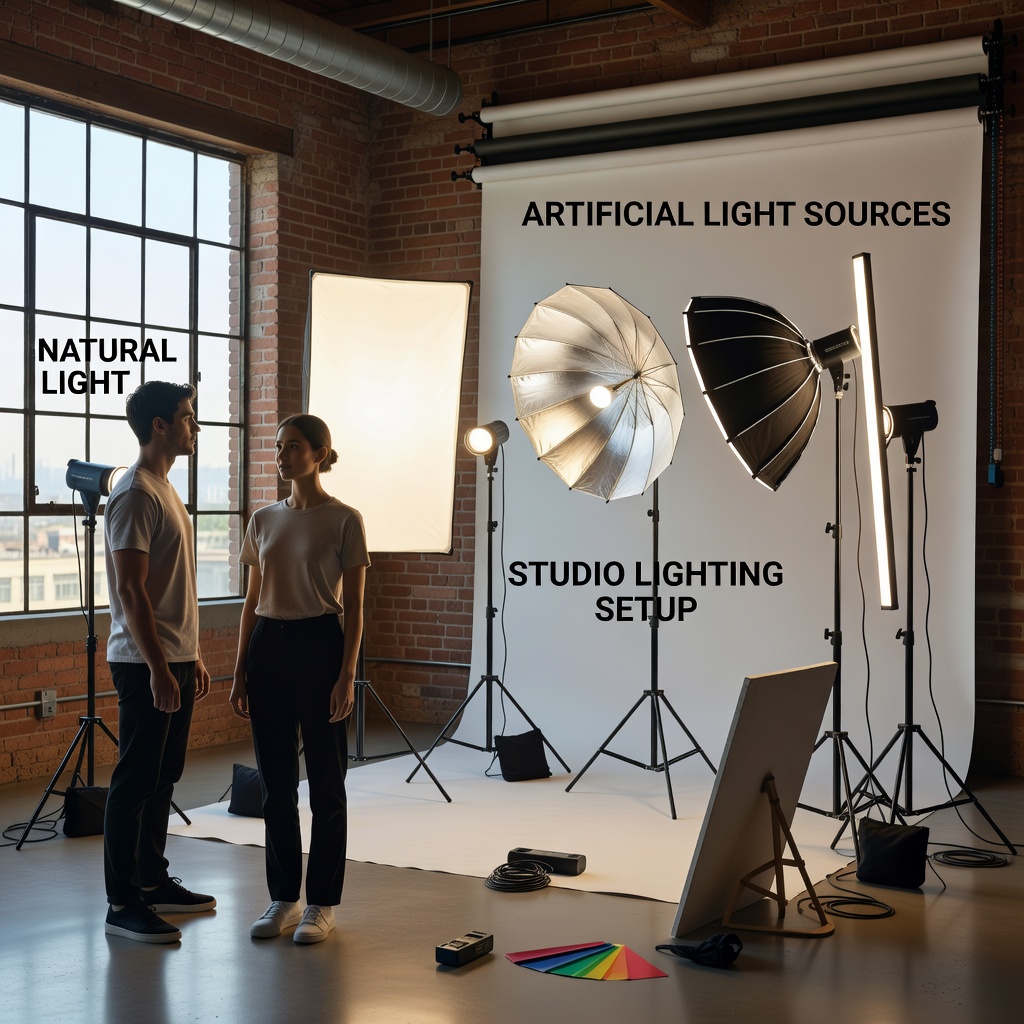
Understanding Light: The Photographer’s Most Powerful Tool
In our previous lessons, we mastered exposure, composition, and depth. Now we explore photography’s foundation: light itself. Light is not just illumination — it is mood, texture, drama, and storytelling. Understanding different types of lighting allows you to work with any situation and create professional results.
This lesson covers natural and artificial light sources, their characteristics, and how to use them effectively.
1. Natural Light Sources
The Sun – Our Primary Light Source
The sun provides photography’s most powerful light, but its quality changes dramatically throughout the day.
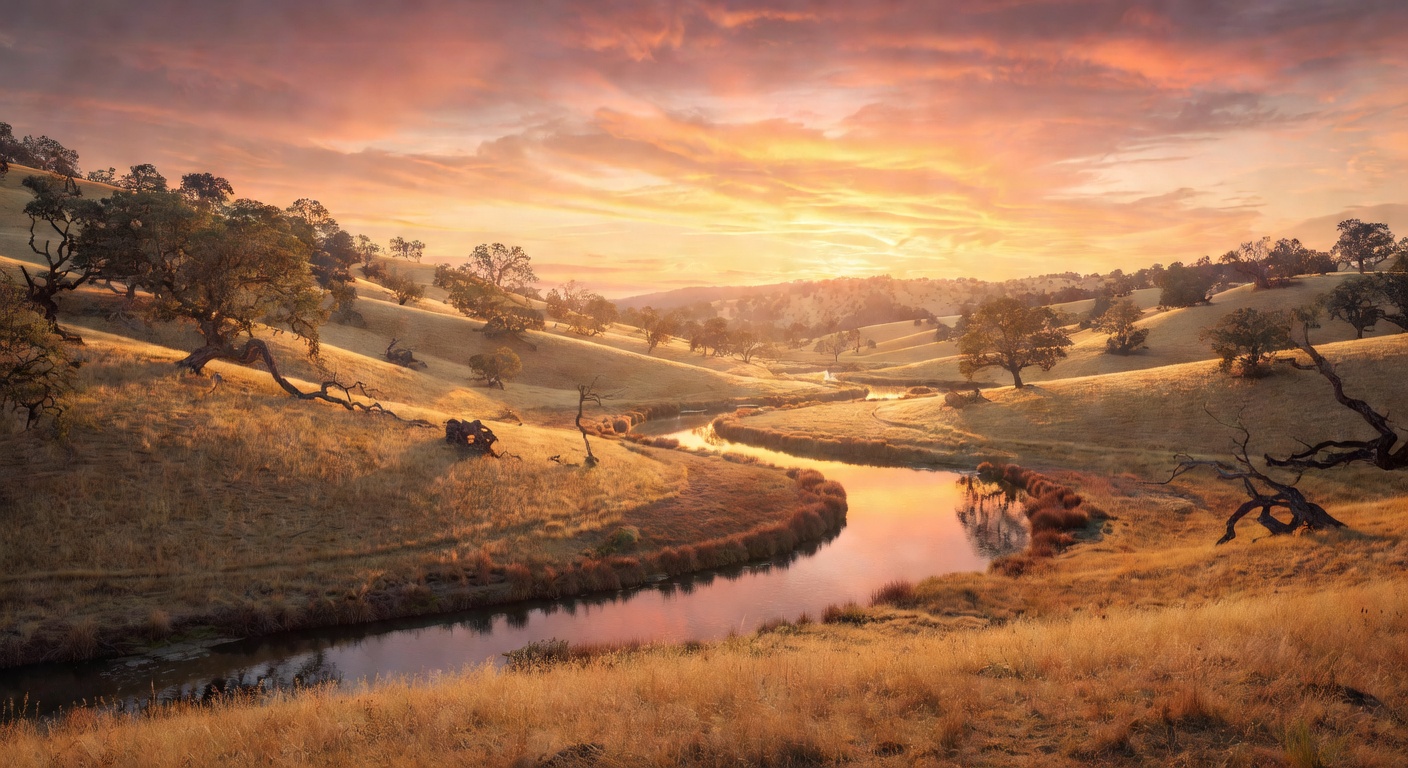
Golden Hour (1 hour after sunrise, 1 hour before sunset):
- Warm color temperature (3000-4000K)
- Long shadows create texture and depth
- Soft, diffused light
- Golden tones flatter skin and landscapes
Midday Sun (10AM-2PM):
- Harsh overhead light
- Short, harsh shadows
- High contrast
- Can cause blown highlights
Blue Hour (30 minutes before sunrise, after sunset):
- Cool blue light (8000-12000K)
- Magic hour for cityscapes
- Low light requires tripod
Moonlight
Reflected sunlight — much weaker (1/250th intensity).
Characteristics:
- Cool blue-white (4000K)
- Extremely low light
- Long exposures (30s+)
Best for: Night landscapes, star trails, lunar photography.
Fire and Candlelight
Warm, flickering light (1800-2500K).
Characteristics:
- Very warm (orange/yellow)
- Flickering creates movement
- Low intensity
- High drama
Best for: Portraits, still life, intimate scenes.
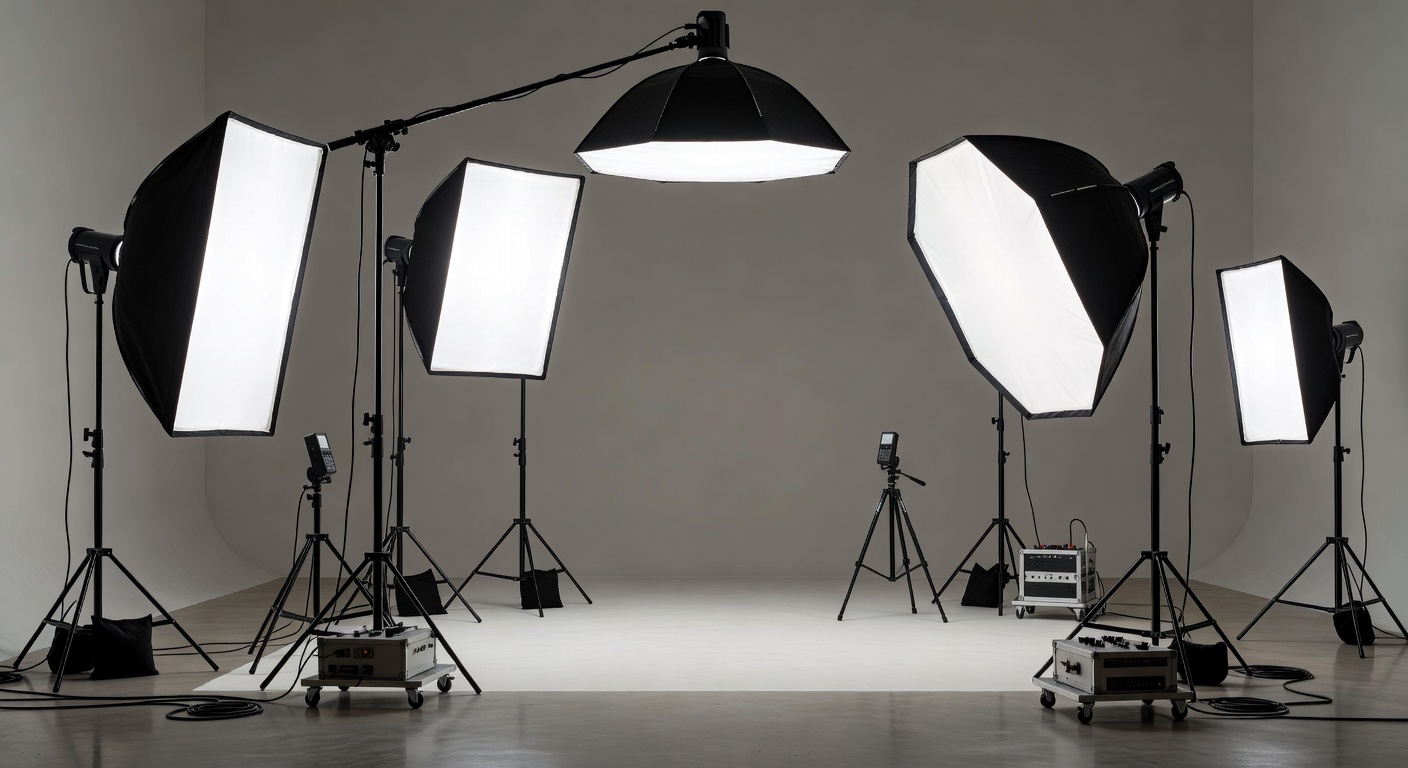
2. Artificial Light Sources
Tungsten/Incandescent
Traditional household bulbs.
Characteristics:
- Warm (2800-3200K)
- Continuous light
- Soft if diffused
Fluorescent
Office and commercial lighting.
Characteristics:
- Cool (4000-5000K)
- Often green/magenta tint
- Flickering (older tubes)
- Flat, unflattering for portraits
LED Lighting
Modern professional choice.
Characteristics:
- Variable color temperature (2700-6500K+)
- Consistent, flicker-free
- Energy efficient
- Dimming capability
Electronic Flash/Strobe
Short, powerful bursts of light.
Characteristics:
3. Quality of Light: Hard vs Soft
The size of the light source relative to the subject determines hardness/softness.
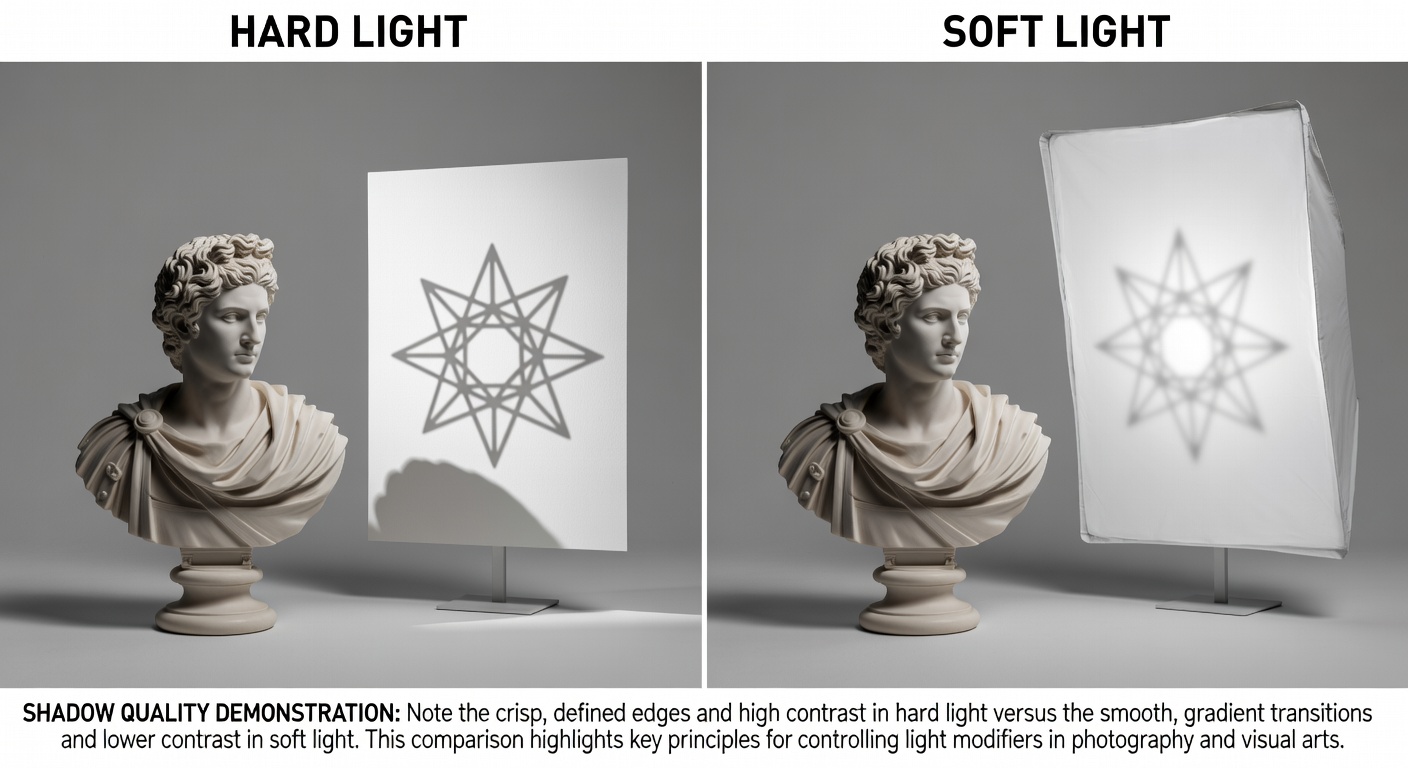
Hard Light
Small light source relative to subject.
Characteristics:
- Sharp, defined shadows
- High contrast
- Dramatic, edgy look
Sources: Direct sun, bare flash, small LED panels.
Soft Light
Large light source relative to subject.
Characteristics:
- Gradual shadow transitions
- Low contrast
- Flattering for portraits
Sources: Overcast sky, diffused window light, softboxes, large reflectors.
4. Direction of Light
Front Lighting
Light coming toward the camera.
Effect: Flat lighting, minimal shadows, reveals detail.
Best for: Product photography, copy work.
Side Lighting
Light from left or right.
Effect: Long shadows, texture, three-dimensional feel.
Best for: Portraits, landscapes, still life.
Back Lighting
Light from behind subject.
Effect: Silhouettes, rim light, separation from background.
Best for: Dramatic portraits, sunsets, creative silhouettes.
Top Lighting
Light from above.
Effect: Dramatic shadows under eyes/chin, modeling effect.
Best for: Fashion, beauty photography.
Bottom Lighting
Light from below.
Effect: Horror movie look, unnatural shadows.
Best for: Creative, Halloween effects.
5. Color Temperature of Light Sources
| Light Source | Kelvin | Color | White Balance Preset |
|---|---|---|---|
| Candlelight | 1800K | Warm Orange | Tungsten |
| Tungsten | 3200K | Warm Orange | Tungsten |
| Fluorescent | 4000K | Cool Green | Fluorescent |
| Daylight | 5500K | Neutral White | Daylight |
| Shade | 7000K | Cool Blue | Shade |
6. How to Identify and Work with Each Type
Golden Hour (Best Overall)
Identification: Warm, long shadows, soft quality.
Settings: Aperture Priority, f/8, ISO 100, let shutter fall.
Midday Sun (Challenging)
Identification: Harsh shadows, high contrast.
Solutions: Fill flash, reflector, shoot in shade, HDR bracketing.
Overcast (Portrait Dream)
Identification: Even, diffused light, no harsh shadows.
Settings: Wide apertures for creamy bokeh.
Tungsten Indoor
Identification: Warm orange cast, soft shadows.
Settings: Tungsten WB, f/2.8 for shallow DoF.
7. Practical Exercises for Lighting Recognition
Exercise 1: The Daily Light Tracker
Place a still life (apple, vase) by window. Shoot every hour from sunrise to sunset. Document:
- Shadow direction and length
- Color temperature changes
- Contrast levels
Exercise 2: Mixed Light Detective
Find rooms with multiple light sources (window + lamp). Shoot before/after correcting white balance. Notice color conflicts.
Exercise 3: Hard vs Soft Portrait Test
Photograph a friend:
- Direct window light (hard)
- Diffused with white sheet (soft)
- Reflector fill for hard light
Compare skin texture, eye shadows.
Exercise 4: Direction Drama
Fixed subject, move single light source around it (front, side, back, top, bottom). Note mood changes.
Exercise 5: Color Temperature Tango
Three bulbs (tungsten, fluorescent, LED daylight). Shoot gray card under each, then portraits. Correct WB for each.
Conclusion: Light is Your Creative Partner
Light is photography’s language. Golden hour whispers romance, harsh midday shouts drama, soft overcast caresses portraits. Master recognition, and you work with any lighting — never fighting against it.
Your next step: next photoshoot, note light quality/direction before clicking. Predict the mood, then capture it. In our next lesson, we will explore how to specifically use natural light to your advantage — techniques that turn everyday light into professional results.
Light awaits — go make magic!