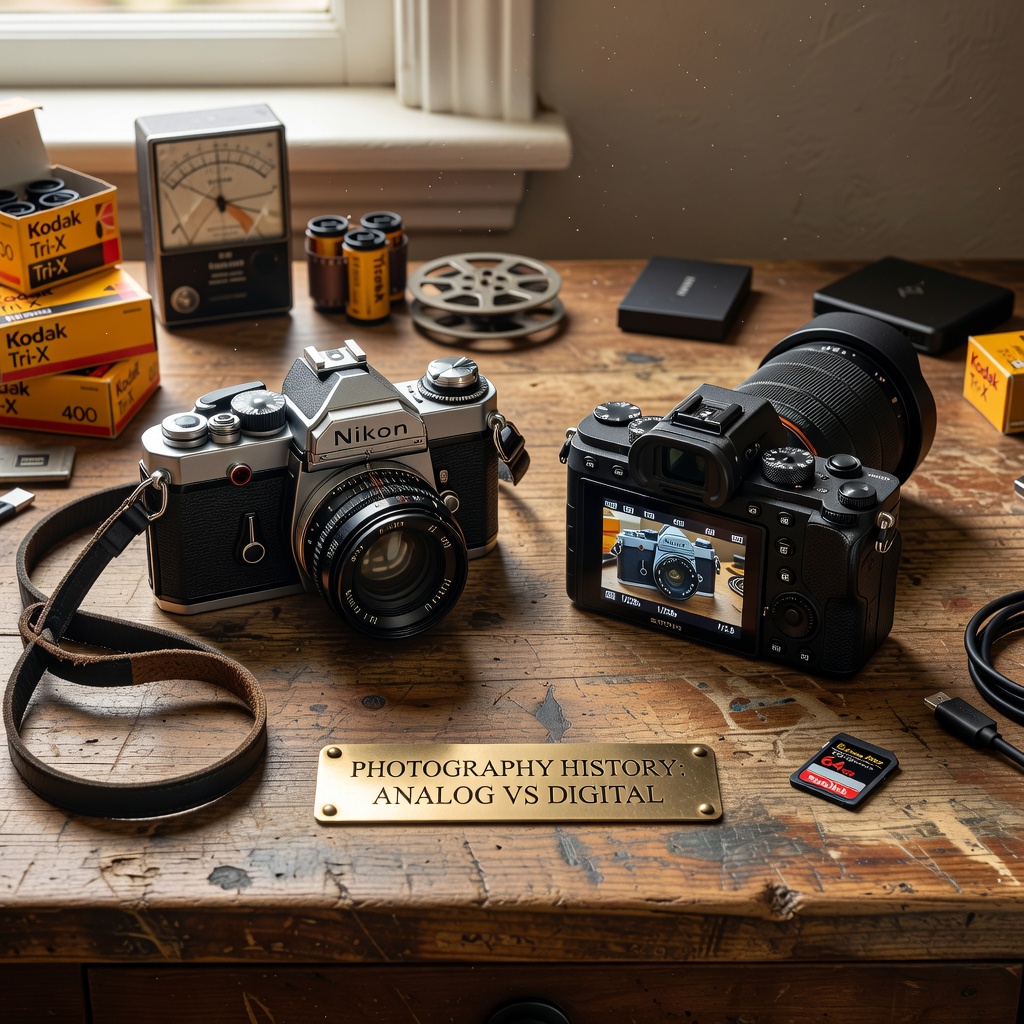
The Two Worlds of Photography
In our previous lessons, we explored what photography is and the types of cameras and lenses available. Now, let us delve into one of the most fascinating debates in photography: digital versus film. Understanding both technologies not only connects us to the rich history of our craft but also makes you a better photographer regardless of which format you choose.
Film photography is not dead — it is experiencing a renaissance. Meanwhile, digital technology continues to evolve at breakneck speed. Let us explore both worlds.
1. A Brief History of Film Photography
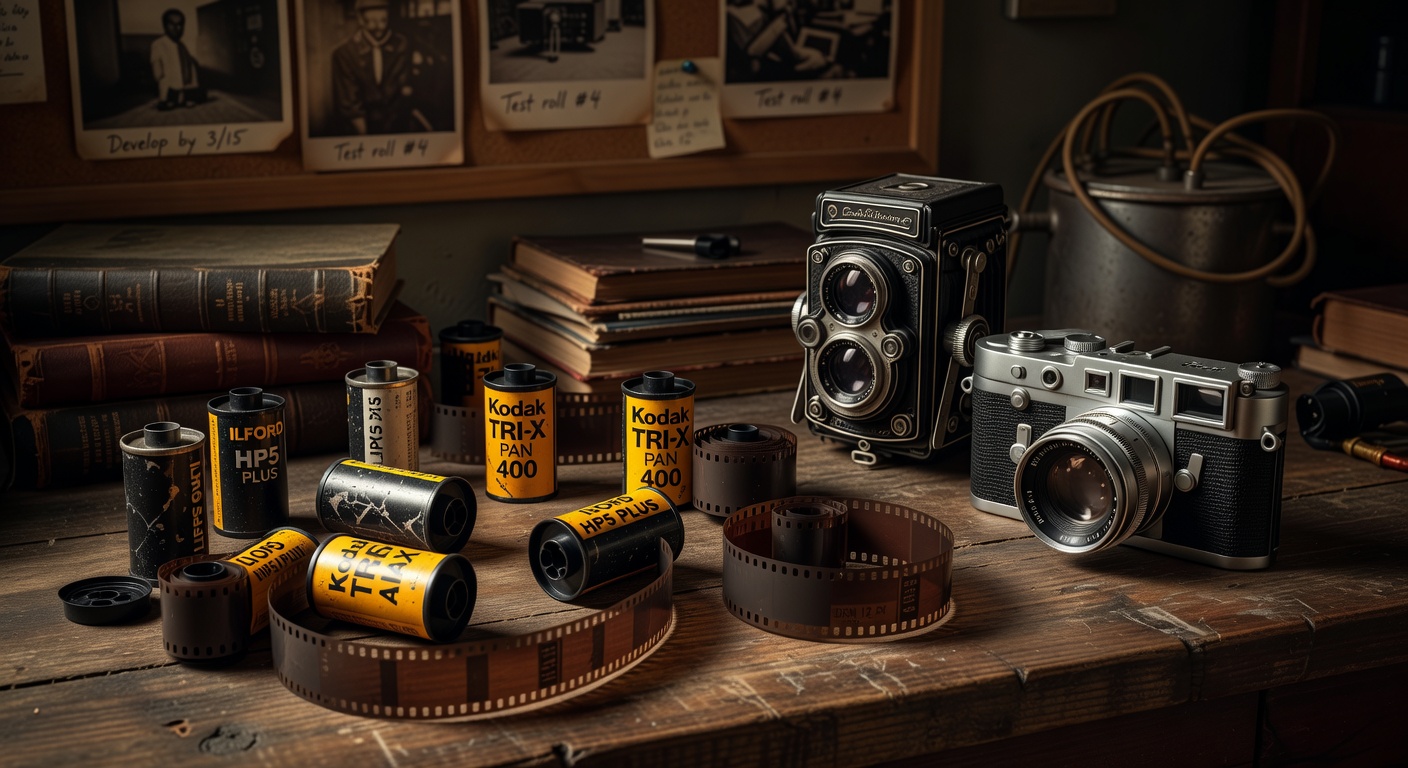
Photography began with film. The first photograph ever taken — Joseph Nicéphore Niépce’s “View from the Window at Le Gras” (1826) — required an eight-hour exposure on a pewter plate coated with bitumen. The journey to film as we know it took nearly a century.
By the 1880s, George Eastman introduced flexible roll film, revolutionizing photography. His Kodak camera came pre-loaded with film for 100 exposures. The slogan — “You press the button, we do the rest” — democratized photography for everyday people.
The 20th century saw film evolve dramatically:
- 1920s: 35mm format standardized (originally for motion pictures)
- 1930s: Kodachrome — the first color film
- 1950s-1970s: SLR cameras became mainstream
- 1980s: Autofocus and compact cameras
- 1990s: Advanced Photo System (APS) and early digital experiments
Film peaked in the late 1990s before digital cameras eclipsed it. Yet today, film is experiencing a remarkable revival among photographers seeking something different.
2. How Film Works
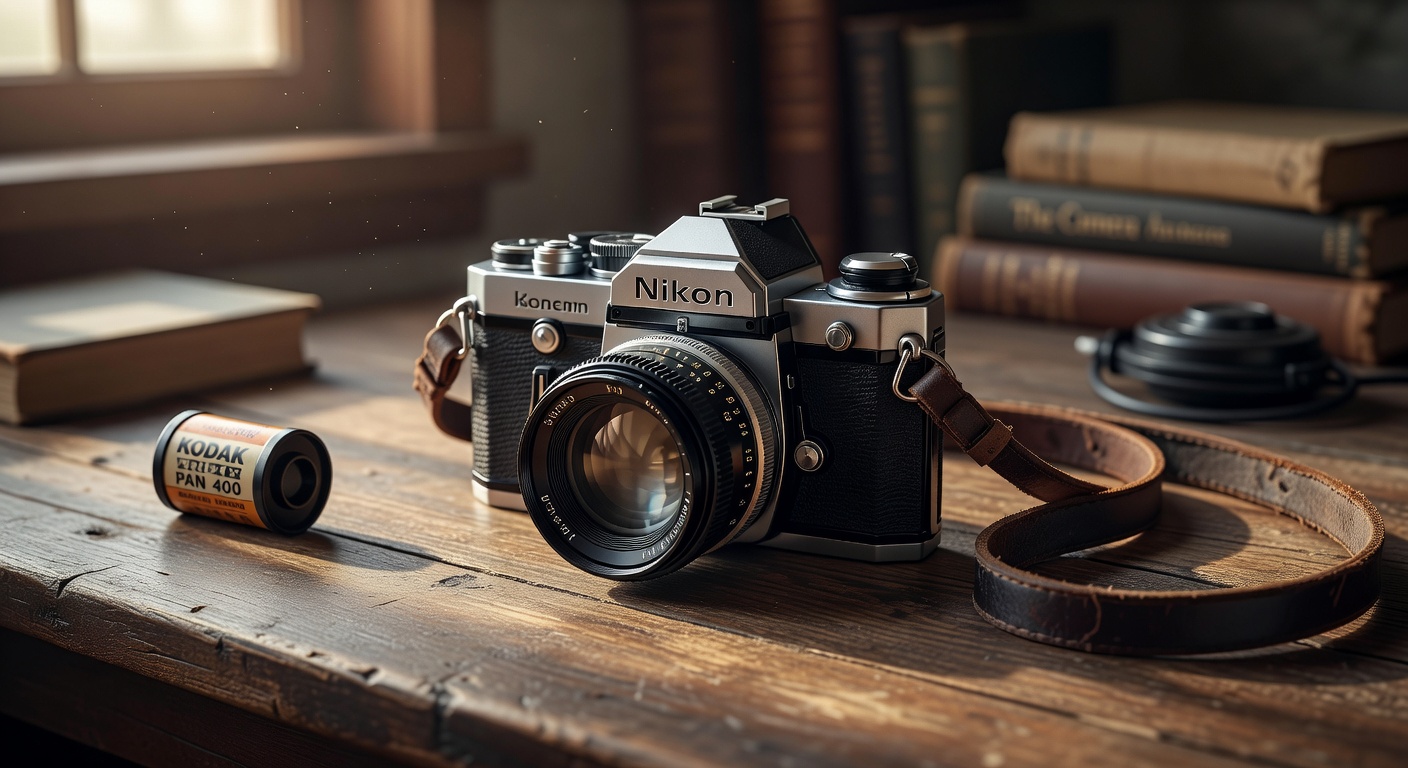
Film is a light-sensitive material coated on a plastic base. The key component is the emulsion — a layer containing light-sensitive crystals (silver halides) suspended in gelatin.
The Chemical Process
When light hits these crystals, it creates a latent image — an invisible chemical change. After exposure, the film is developed in a chemical process that transforms the latent image into a visible one. This process can be manipulated:
- Pushing: Intentionally underexposing and over-developing to increase sensitivity
- Pulling: Over-exposing and under-developing for finer grain
- Cross-processing: Using slide film in C-41 chemicals (or vice versa) for unusual colors
Film ISO
Film has a fixed ISO (sensitivity) determined during manufacture:
- ISO 100: Fine grain, bright sunlight
- ISO 400: General purpose, versatile
- ISO 800-3200: Low light, action, with increasing grain
Unlike digital, you cannot change ISO mid-roll (without compensation techniques). This forces intentionality.
Grain: The Film Aesthetic
Unlike digital noise (which appears randomly), film grain is a physical characteristic — actual silver crystals. Many photographers find grain aesthetically pleasing, associating it with organic, timeless quality.
3. How Digital Sensors Work
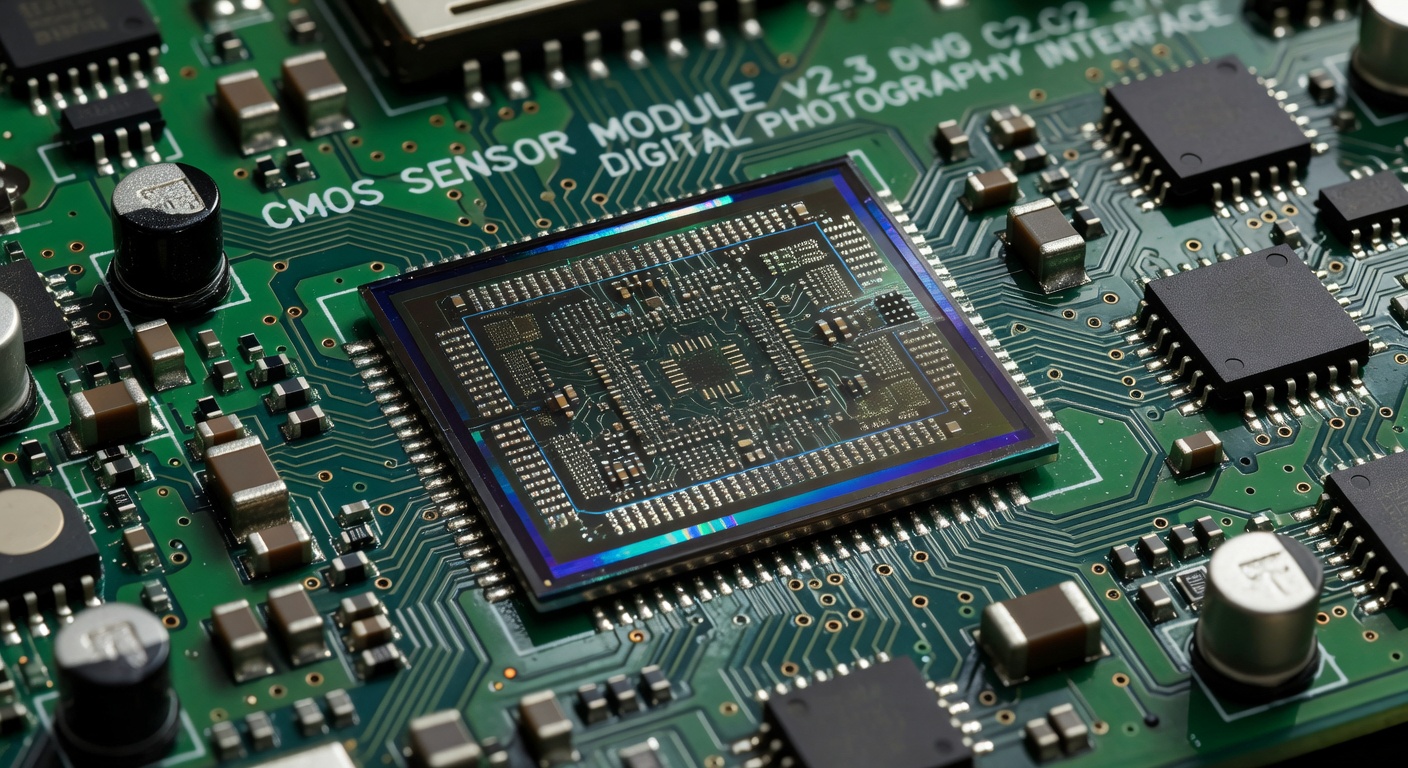
Digital cameras capture light electronically. The heart is the image sensor — a silicon chip containing millions of light-sensitive pixels (photodiodes).
CMOS vs CCD
Two main sensor technologies exist:
- CMOS (Complementary Metal-Oxide-Semiconductor): Dominates today due to lower power consumption and faster readout. Used in virtually all modern cameras.
- CCD (Charge-Coupled Device): Once premium, now rare. Offers excellent image quality but consumes more power and is slower.
The Bayer Filter
Sensors capture light intensity but not color. The Bayer filter — a mosaic of red, green, and blue filters over pixels — solves this. Each pixel records one color; the camera’s processor interpolates to create a full-color image.
Recent innovations include:
- Back-side illumination (BSI): Improves low-light performance by wiring sensors differently
- Quad Bayer / pixel-binning: Combines pixels for better low-light or higher resolution
4. Key Differences: Film vs Digital
Dynamic Range
Modern full-frame sensors typically offer 14-15 stops of dynamic range. High-end medium format sensors reach 16+ stops. Film typically offers 10-13 stops. However, film handles highlights differently — they “roll off” more gracefully, while digital clips harshly.
Color Depth and Tone
Digital offers precise color control — white balance, color profiles, and editing flexibility. Film has distinctive color characteristics: Kodak Portra’s skin tones, Fuji Velvia’s saturated landscapes, Cinestill’s cinematic look.
Resolution and Detail
Digital resolution is measured in megapixels. Modern sensors offer 24-100+ megapixels. Film resolution depends on grain and lens quality — theoretically comparable to 20-30MP, but practical results vary.
Cost per Shot
Film: $5-15 per roll (36 exposures) + development ($10-25). Each shot costs money.
Digital: Minimal cost per shot. Memory cards are reusable. Only initial investment matters.
Instant Feedback
Digital: Check histogram, review sharpness, reshoot immediately.
Film: Wait for development. This delay creates anticipation and forces careful shooting — but makes learning slower.
5. Advantages and Disadvantages
Film Advantages
- Unique aesthetic (colors, grain, highlight roll-off)
- Forced intentionality (limited shots)
- No menu diving — pure mechanical experience
- Simpler gear (no batteries for basic cameras)
- Tangible prints and negatives
Film Disadvantages
- Ongoing costs
- Delayed feedback
- Limited ISO flexibility
- Scanning challenges
- Film discontinuation risks
Digital Advantages
- Instant feedback and review
- Unlimited shots
- Flexible ISO (change anytime)
- Advanced features (IBIS, autofocus, video)
- Easy sharing and editing
Digital Disadvantages
6. The Film Revival
Film is experiencing an unexpected renaissance. Why?
Nostalgia and Aesthetics
Gen Z photographers — raised on digital — crave analog tactility. Instagram’s #filmisnotdead has over 10 million posts. The unique look of film — its grain, color rendition, and unpredictability — cannot be perfectly replicated by digital filters.
Mindful Shooting
Limited rolls force you to slow down. Each shot matters. This mindful approach counters digital fatigue from thousands of disposable images.
Physical Artifacts
Film produces tangible negatives — actual physical objects you can hold. Prints from film feel different from inkjet outputs.
New Products
The industry is responding. New films continue to launch (Cinestill, fresh stocks from Kodak and Ilford). Lomography pushes creative boundaries with experimental films.
Notable Users
Major artists shoot film: Billie Eilish uses Kodak Portra for her press photos. Professional photographers return to film for creative projects. Film gives a unique look that stands out in a sea of digital perfection.
7. How Film Knowledge Improves Digital Photography
You do not need to choose one over the other. Understanding film makes you better at digital.
Intentionality
Film teaches you to compose carefully — you have 36 shots, not 3,000. Apply this mindset to digital: slow down, think before pressing the shutter.
Exposure Mastery
Without instant histogram feedback, film photographers learned to read light. This skill translates to digital: understanding exposure becomes intuitive, not dependent on screen review.
Light and Color Understanding
Film’s limited dynamic range teaches you to recognize when highlights will blow. This translates to digital: you become more confident pushing shadows or protecting highlights.
Texture and Grain Appreciation
Film grain adds texture. Understanding this helps you decide whether to add grain in post-processing or keep digital images clean.
Creative Experimentation
Cross-processing, pushing, pulling — these film techniques inspire digital experimentation. Try emulating film looks in Lightroom or capture specific scenarios for the “film aesthetic.”
Conclusion: Two Sides of the Same Coin
Film and digital are not enemies — they are siblings in the family of photography. Each has unique strengths. Many photographers use both: digital for work and efficiency, film for creative expression and personal projects.
Regardless of your choice, understanding both technologies makes you a more complete photographer. You gain appreciation for the craft’s history while leveraging modern capabilities.
In our next lesson, we will explore camera settings in depth — specifically the difference between manual and automatic modes, and how to use each effectively. This builds directly on what we have learned about cameras and their capabilities.
Whether you choose film, digital, or both — the journey continues.